

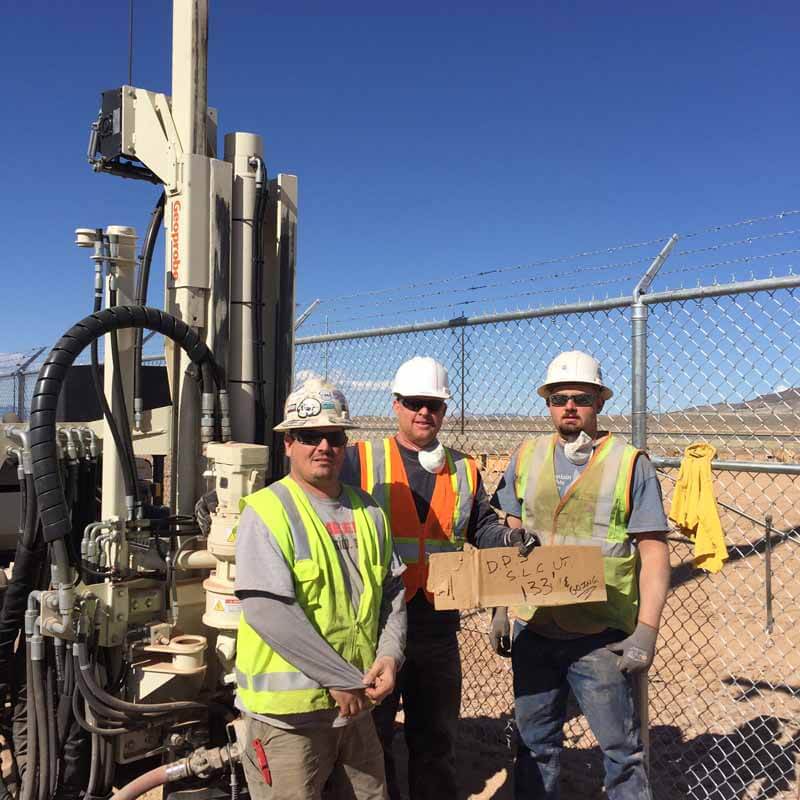
(l to r) Ryan Roodbol, Sean Bromley, and Jon Thompson drilled to 133 feet and 183 feet at all three locations to install the grounding rods.
Solar grids were constructed in the central region of Utah which run through the state into Nevada to help meet the demand for more power. For each solar grid, a new substation was also constructed. That’s where Direct Push Services in Salt Lake City, UT, entered the picture.
Direct Push Services installed copper grounding rods at each new substation which required the placement of four grounding rods between 133- to 183-ft. bgs. In order to reach those depths in soil conditions consisting of largely layered sand, gravel, and cobbles, as well as 3- to 15-ft. layers of weathered shell, DPS needed to have 4.5-in. diameter holes. Those drilling conditions did not allow for direct push or auger methods, so DPS used ODEX.
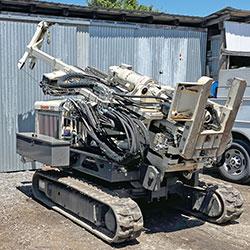
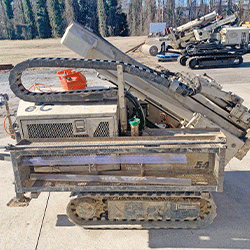
According to Sean Bromley, Owner of Direct Push Services, “We were extremely grateful to have the breakout wrench and the overhead winch on the 7822DT to hold and manage the weight of the downhole hammer and drill tooling at those great depths. Once we were able to trip the hammer out and begin installing the grounding rods, we fed the copper wire through the winch pulley to lower it down the hole and keep tension on it while backfilling and retrieving the outer casing,” he added. The grounding rods were 10-ft.-long 1-in. solid copper rods which were heat welded to a spool of 3/4-in. copper wire. DPS was on this project at three separate sites for ten days.
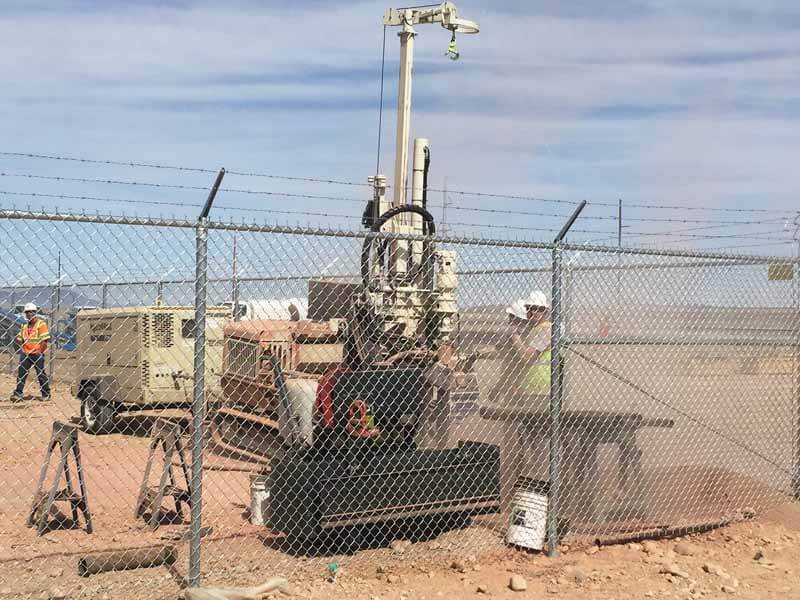
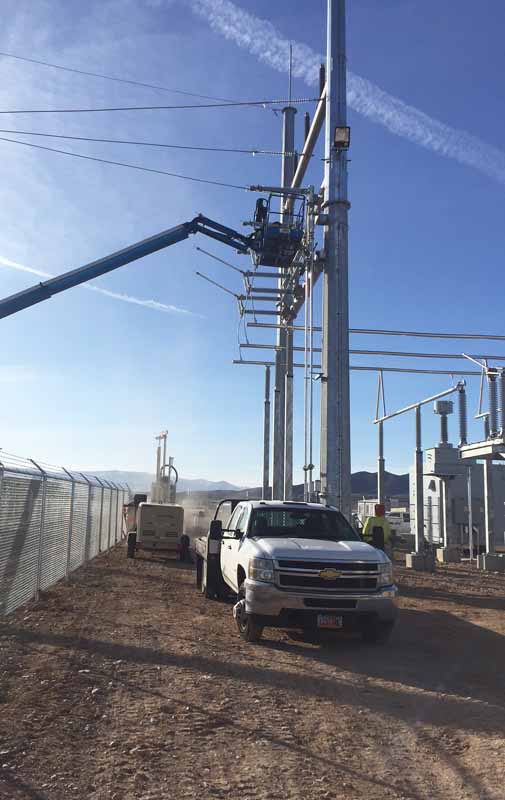
DPS would drill and set multiple grounding rods between 133 and 183 feet. Even though the site was out in the “middle of nowhere,“ the drilling conditions were tight with little wiggle room.
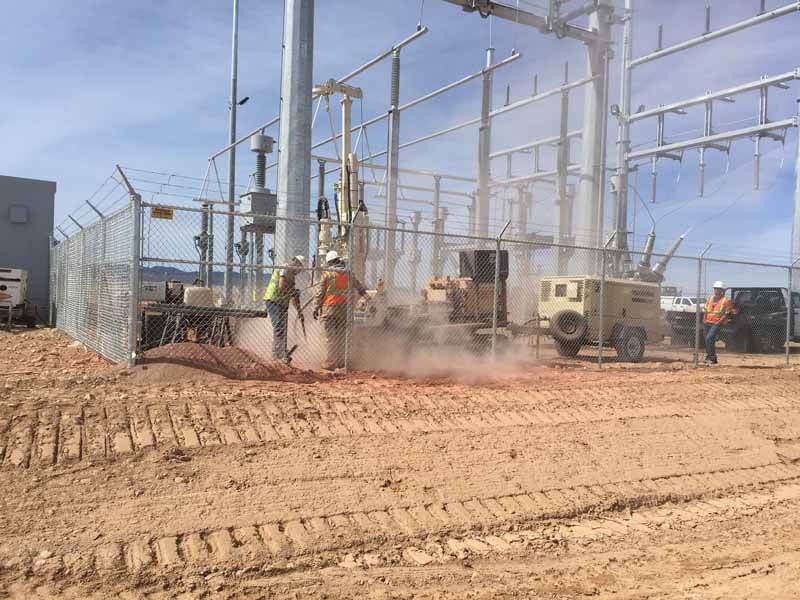
The field team worked on elevated soils both outside and inside a fenced area at the same time the substation was being constructed.
Those overseeing the project were impressed with the small footprint and capabilities of the 7822DT.
“Our field team showed great ingenuity for getting the necessary drill rods and tooling into tight areas, as well as being able to pull an air compressor in to place,” Sean said. “With the help of Geoprobe® engineers, we were able to use 4.5-in. tooling as the outer drill string and attach a downhole hammer system with a casing advancer.”
“The 7822DT we used on this project is nick named ‘EDNA,’” Sean added, “after Ryan Roodbol’s grandmother who passed away last year. She raised him from a little boy, and he could always count on her for whatever he needed.”
Contact Us
1835 Wall Street
Salina, Kansas 67401
Phone: (785) 825-1842
Photo Gallery
(l to r) Ryan Roodbol, Sean Bromley, and Jon Thompson drilled to 133 feet and 183 feet at all three locations to install the grounding rods.
The new grounding rods Direct Push Services installed for the Utah solar grid project will help meet the demand for more power in the state.
The Direct Push Services field team squeezed inside the new substation area to install copper grounding rods for their project in central Utah.
Subsurface work was completed at the same time a new substation was constructed at each of the three sites.
Related Articles
Strong customer support and expert repairs turned a potentially serious equipment setback into a successful recovery.
ID: 14894 | Date:
Upgrading a well-maintained drill rig proved to be a cost-effective way to boost reliability and support long-term operations.
ID: 14893 | Date:
Elite Techniques Inc. relies on Geoprobe's North Carolina Service Center for dependable service, expert support, and quality repairs that help keep its drilling operations running smoothly.
ID: 14892 | Date:
Mobile Environmental Analytical Inc. relies on Geoprobe's East Coast Service Center for fast, expert repairs and responsive support that keep its drilling fleet operating efficiently and minimize downtime in the field.
ID: 14891 | Date:
Envirocheck relies on the Geoprobe® North Carolina Service Center for fast, expert support, giving them the confidence to grow their fleet and keep projects moving without delays.
ID: 14831 | Date: