

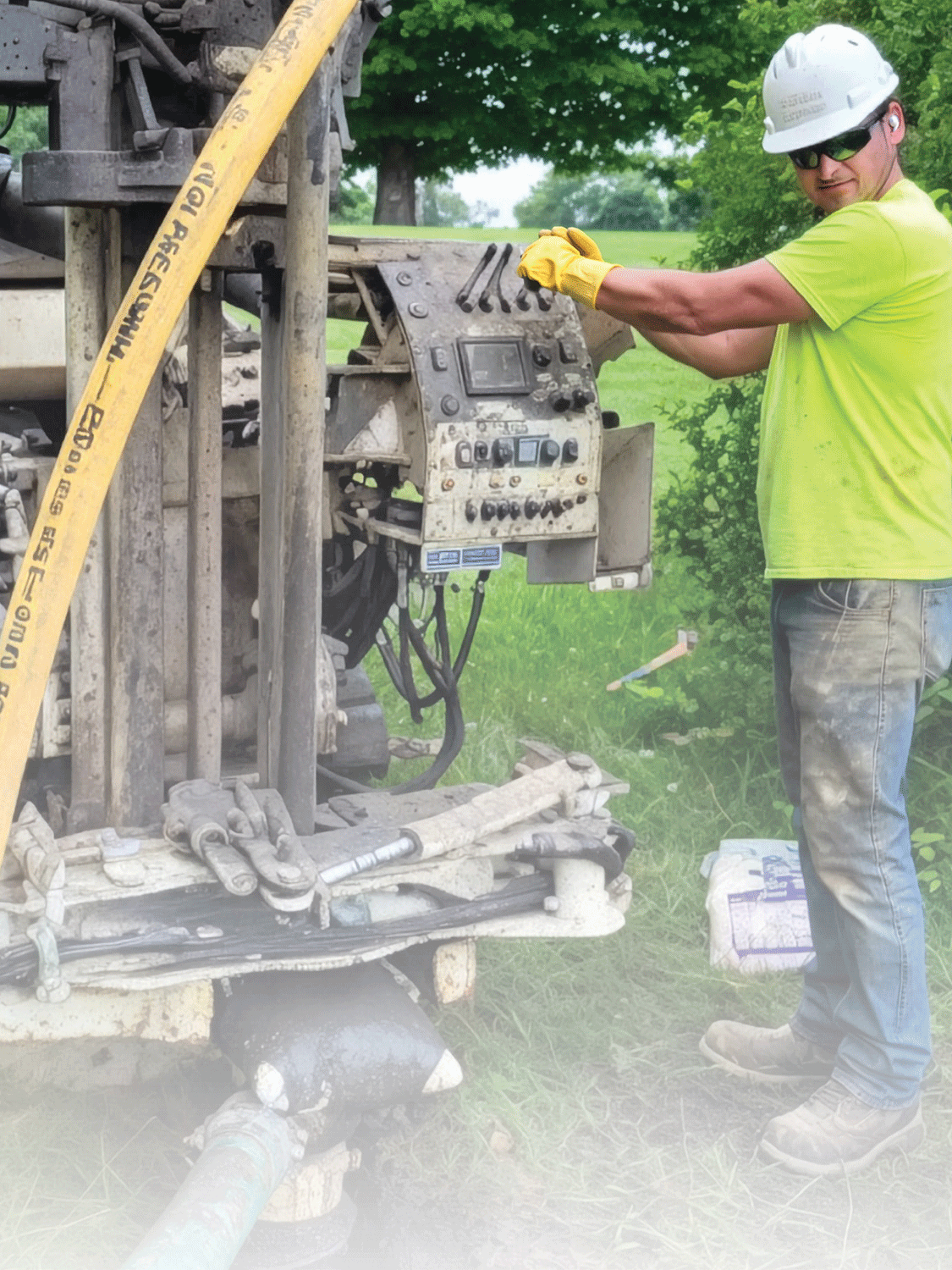
Outfitting 7822DT as a rock drilling rig proves cost effective compared to subcontracting work.
Subcontracting rock drilling at $7,000 per day was killing chances to win bids.
"Around here it's often only 10-15 feet before you hit bedrock," Nathan Ferree, operator, said. "That's $7,000 to set isolation casing one day, and then $7,000 the next day to drill 20 feet into bedrock."
The math didn't work. So, CHASE ENVIRONMENTAL changed the equation.
A Low-Cost Rock Drilling Rig Solution
Rather than purchasing specialized equipment, the team outfitted their 2012 7822DT with a new foot, breakout, and wet water swivel for rock drilling and coring.
"There wasn't a lot of up-front cost to be able to drill rock wells and core, and the machine is still 100 percent functional for hollow stem auger and probing," Ferree said. "With the ability to do rock drilling ourselves, it actually makes the job more profitable."
Now when companies like Wawa have sites requiring bedrock wells, Chase is more competitive and more profitable.
“We ran the numbers. If we do 3 or 4 of these projects, it pays for itself,” Ferree said. “Now we drill down 7-10 feet then switch to rock drilling down to 50 feet. We’ve only been to 55 feet, but I guarantee we could go deeper. We just haven’t bought the rods.”
Expanding Capabilities
The success prompted Chase to invest further. With their 2012 unit accumulating hours, they added a 7822DT V4 featuring wider tracks moved forward for improved stability and load-sense hydraulics that apply appropriate power for each operation.
“The 7822DT V4 has more capabilities with the head feed controls, so it only advances at a certain rate when rock hammering versus feathering,” Ferree said.
The Right Fit
For Chase, setting up their 7822DTs as a rock drilling rig has been a "game changer".
“It’s just right for when a consultant is wanting to drill 50 or 60 feet into rock for one or two rock wells to see where groundwater is located,” Ferree said.
The compact size of the 7822DT delivers additional advantages.
“We can pull our 7822DT on a trailer without a CDL and rock drill. We can use the blade to pick up a pallet and move materials around on site,” Ferree said. “The smaller footprint is great for getting under canopies or powerlines, going through mud, or tucking in between houses.”
That versatility recently helped another Chase office when their conventional rock drilling rig couldn't handle a challenging site.
“We brought our 7822DT to help out another office whose conventional rig couldn’t go over the hill to drill a rock well — it was too wet for the bigger rig,” Ferree said.
Two Decades of Trust
With 20 years at Chase, Ferree has seen the company's rigs progress alongside industry demands.
"We've had everything Geoprobe® from a 66 to a 7822DT. It's been a constant progression of better rigs and sampling tooling," he said. "We run our machines pretty hard, and they don't break."
For Ferree, the verdict is simple.
"Drillers know when they get a quality product. We can hear it, feel it, see it," Ferree said. "I'd simply tell anyone, 'Buy a Geoprobe®'."
Contact Us
1835 Wall Street
Salina, Kansas 67401
Phone: (785) 825-1842
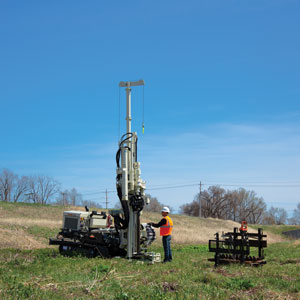
Outfitting 7822DT as a rock drilling rig proves cost effective compared to subcontracting work.
Related Articles
Mobile Environmental Analytical Inc. relies on Geoprobe's East Coast Service Center for fast, expert repairs and responsive support that keep its drilling fleet operating efficiently and minimize downtime in the field.
ID: 14891 | Date:
Ace Dewatering relies on the Geoprobe® 7822DT to handle geotechnical and environmental work alongside dewatering, bringing versatility, access, and efficiency to every project.
ID: 14822 | Date: